Secondary Cataract
Secondary cataract or posterior capsule opacification (PCO), is common and can occur between a few months and several years after cataract surgery. This condition causes a decrease in visual acuity, characterised by blurred vision and increased sensitivity to glare. The treatment is straightforward and consists of a YAG laser capsulotomy. This procedure allows vision to be restored quickly and is entirely painless.



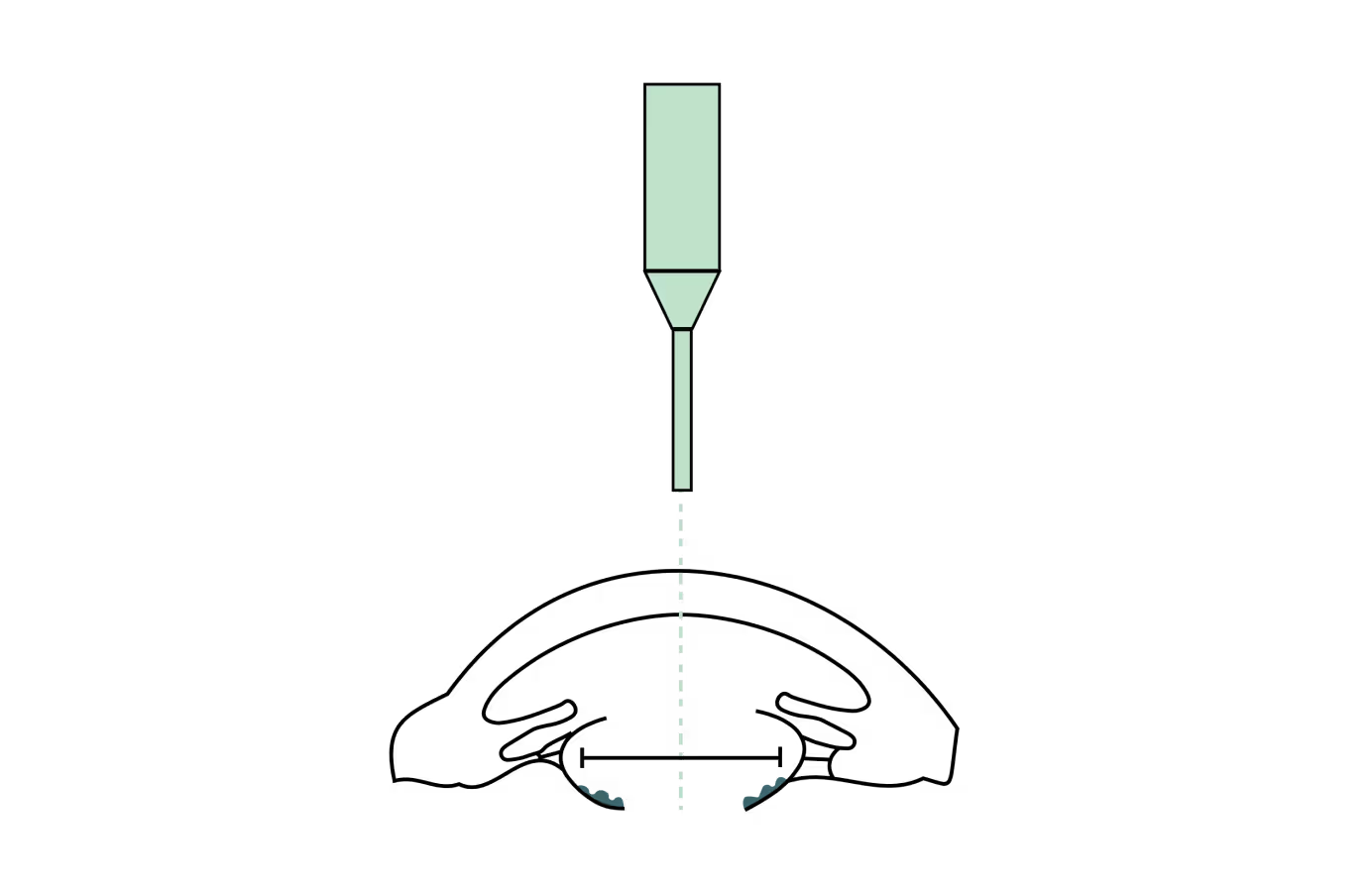
After cataract surgery, a thin membrane behind the implant can become cloudy over time, which again interferes with vision. This is called a secondary cataract. It can be treated simply and painlessly thanks to the YAG laser, which creates an opening in this membrane to restore clear vision.
What is a secondary cataract?
A secondary cataract, or posterior capsule opacification (PCO), is a common development following cataract surgery. It is caused by the proliferation and migration of residual lens epithelial cells onto the posterior capsule, which is the membrane left in place to support the intraocular lens (IOL) implant. This opacification may appear between a few months and several years after the initial procedure.
What are the symptoms?
Secondary cataract manifests as a gradual decrease in visual acuity, blurred vision and sometimes increased sensitivity to glare. Patients often describe a return of the symptoms they experienced prior to their original cataract surgery.
What is the treatment?
The treatment is straightforward, rapid and non-invasive. It involves a YAG laser capsulotomy, a procedure performed in the clinic using anaesthetic drops. The laser creates a central opening in the opaque posterior capsule, allowing light to reach the retina and restoring clear vision.
Results are generally immediate and long-lasting. While the procedure is highly effective, rare risks are discussed during the consultation, such as a temporary increase in intraocular pressure or a very low risk of retinal tear or detachment. Overall, while PCO can alter vision after surgery, it is easily and effectively managed.

Les questions fréquentes
Si vous avez d'autres questions n'hésitez pas à nous contacter !
How long does cataract surgery take?
The procedure itself lasts a few minutes, and the patient can go home straight afterwards.
How is opacification treated after a cataract?
With a YAG laser capsulotomy, a quick and painless procedure that restores vision within a few minutes.
Has the cataract come back?
No, a cataract cannot come back. Posterior capsule opacification is different and involves the bag left in place to support the implant.
Do I need to stop my activities after laser treatment?
No, activities can be resumed immediately, although there may be slight temporary blurring.
Is the YAG laser painful?
No, it is performed under topical anaesthesia with drops and is completely painless.
Can the cataract problem return after the laser?
No, once the capsule has been opened, the opacification does not return in the same place.
Why is my vision becoming blurred again after cataract surgery?
This is probably posterior capsule opacification, a natural and common development after the operation.
When will I regain good vision after the laser?
The improvement is often immediate, but may take a few days if the eye is sensitive.
Are there any risks with the YAG laser?
Risks are very rare but may include a transient rise in intraocular pressure or, exceptionally, a retinal detachment.
Book a consultation
Swiss Visio Montchoisi
1006 Lausanne, Switzerland