Cataract surgery cost in Switzerland: price and LAMal reimbursement
How much does cataract surgery cost in Switzerland, and what does LAMal actually reimburse? Here is the cost, your out-of-pocket share and the premium lens supplement.
Created on
20.07.2026
·
Updated on
09.08.2026
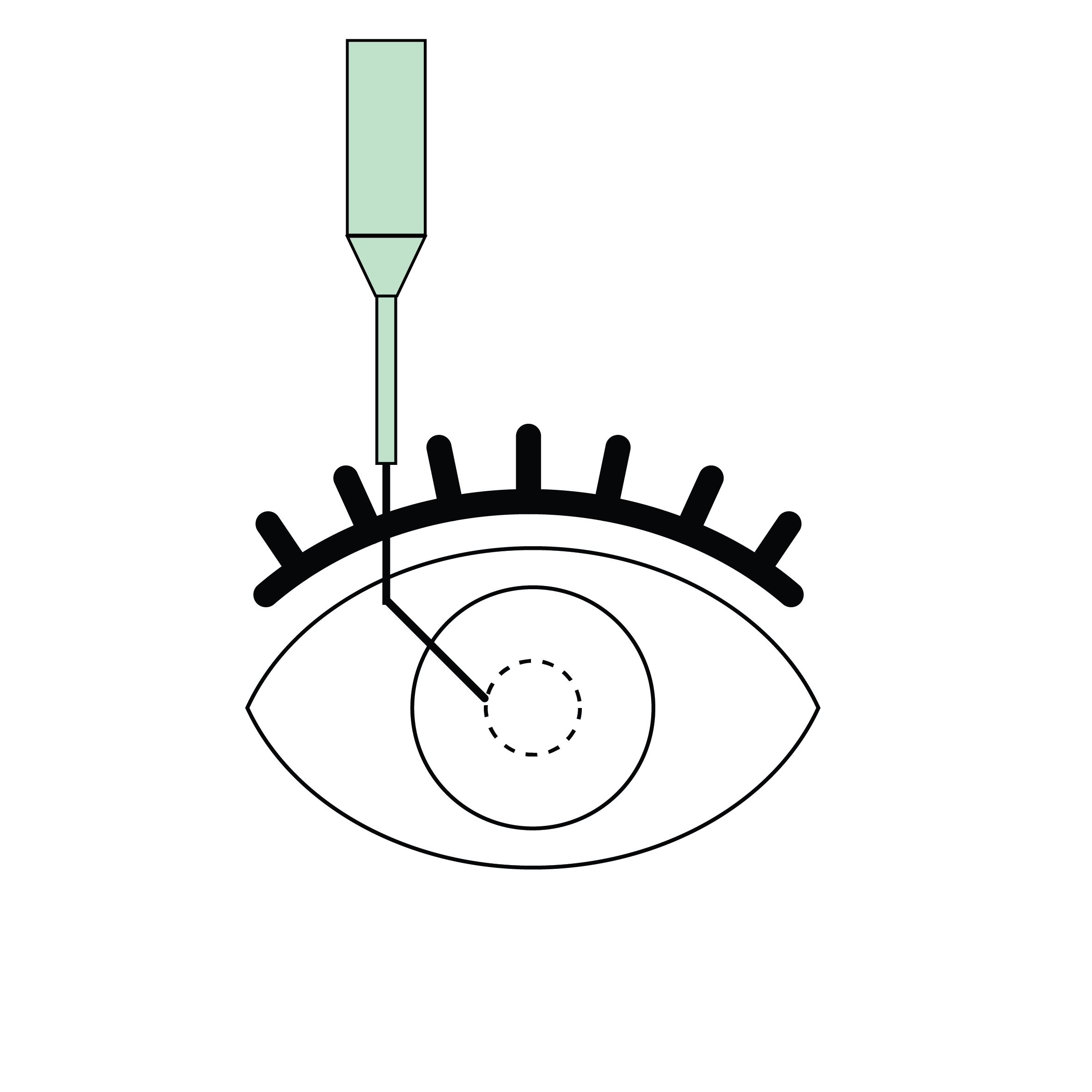
Yes, in Switzerland cataract surgery is covered by LAMal, the compulsory Swiss basic health insurance, because a cataract is a recognised medical condition. The procedure and the standard lens are covered. Your out-of-pocket share is limited in principle to your annual deductible and the 10% co-payment. An extra cost arises only if you choose a premium lens.
This article sets out the real cost of cataract surgery, what LAMal covers, what remains payable by you, the price of premium lenses and the role of supplementary insurance. For the surgical procedure itself, you can read our page dedicated to cataract surgery.
Is cataract surgery reimbursed by LAMal?
A cataract is a progressive clouding of the crystalline lens, the eye's natural lens, which reduces vision. It is a medically recognised condition, not an elective comfort procedure. As such, its surgical treatment falls within the compulsory benefits of Swiss basic health insurance.
In practice, as soon as the operation is medically indicated by your ophthalmologist, LAMal reimburses it. The indication is based on visual impairment, clinical examination and ocular biometry, not on a simple cosmetic wish.
Coverage applies whether one eye or both are operated on, usually a few weeks apart. Cataract surgery is among the most frequently performed procedures in Switzerland, according to data from the Swiss Ophthalmological Society (SSO).
What basic health insurance covers
Basic health insurance is the reimbursement foundation that is identical for every insurer in Switzerland. For a medically indicated cataract, it covers the essential part of the care pathway.
The following are, in principle, covered by LAMal:
- The consultation and the pre-operative assessment, including ocular biometry.
- The phacoemulsification procedure, the reference technique for removing the clouded lens.
- The standard monofocal intraocular lens, the implant placed to replace the crystalline lens.
- Outpatient care, as well as the usual post-operative follow-up.
- Local anaesthesia and the surgeon's fees according to the agreed tariff.
In other words, the operation itself does not leave you with a full bill to settle. Reimbursement follows the official tariff, and your contribution is limited to the deductible and co-payment mechanisms described below.
What remains payable by you under LAMal
Your out-of-pocket share is the portion of costs that the insured person pays themselves, despite LAMal coverage. In Switzerland it rests on two mechanisms: the annual deductible and the co-payment.
The annual deductible
The annual deductible is the amount you pay before the insurer reimburses. It is chosen in advance, between 300 CHF and 2'500 CHF per year for an adult. If your annual healthcare costs already exceed the deductible, it adds no cost for the operation.
The 10% co-payment
The co-payment is your 10% contribution on costs exceeding the deductible, capped at 700 CHF per year for an adult. Above this cap, basic health insurance takes over in full.
The table below gives an indicative order of magnitude for your out-of-pocket share, excluding a premium lens. The actual amounts depend on your deductible and the costs already incurred during the year.
In most cases, your total contribution for the operation therefore stays within these annual caps. Only the choice of a premium lens can add an extra cost, payable by you.
The extra cost of premium lenses
A premium lens is an intraocular lens with advanced functionality that goes beyond the simple distance-vision correction provided by the standard monofocal lens. LAMal does not cover this supplement.
These lenses aim to improve the quality of vision and/or reduce dependence on glasses, but their relevance depends on your eye and your lifestyle. The main types are:
- Aspheric lenses, which improve contrast vision
- Toric lenses, which correct associated astigmatism
- Multifocal or EDOF lenses, which aim for good vision from distance to near without glasses
The extra cost is payable by you and is calculated per eye. As a guide, it often ranges between 300 CHF and 2'500 CHF per eye depending on the type of lens and the clinic. This amount is added to the portion covered by LAMal for the surgical procedure.
The choice of a premium lens is discussed during the consultation. It depends on biometry, the condition of the cornea and retina, and your visual expectations. You can find out more on our page devoted to premium intraocular lenses.
The role of supplementary insurance
Supplementary insurance is optional cover, taken out in addition to LAMal, which can improve the comfort of your care. It does not change the fact that the basic operation is already reimbursed.
Depending on the contract, supplementary insurance may contribute to free choice of surgeon, a private room in case of hospitalisation, or certain supplements. Cover for a premium lens remains variable.
Before the operation, check with your insurer what your supplementary policy provides. Ask specifically whether the extra cost of a toric or multifocal lens is covered, in full or in part.
Operating in a private clinic or the public sector
The place of the operation mainly affects comfort and organisation, not the principle of reimbursement for the medical procedure. A cataract is today treated on an outpatient basis, without hospitalisation in most cases.
Dr Hammer operates in particular at the Montchoisi clinic in Lausanne. In a private clinic, the medically indicated procedure remains covered by LAMal.
The choice of setting is discussed according to your cover and your preferences. A clear quote makes it possible to anticipate any uncovered costs before setting the date.
In practice at Dr Hammer's practice
During the consultation, Dr Arthur Hammer, FMH-certified ophthalmic surgeon, performs the biometry and other necessary additional examinations, and assesses the surgical indication. He explains what LAMal covers and, if a premium lens is being considered, he provides an estimate of the extra cost per eye. You leave with a clear view of your out-of-pocket share, before any decision.
How to obtain a quote for your operation
A quote is a written estimate of costs, tailored to your medical and insurance situation. It is the most reliable tool for knowing your real out-of-pocket share.
To prepare it, the practice needs to know the chosen type of lens, your deductible, and whether you hold any supplementary insurance. The quote clearly distinguishes the portion covered by LAMal from any supplement payable by you.
Every situation is different, and only a specialist examination can confirm the indication and the choice of lens. To prepare your plan, you can explore the cataract as a reason for consultation or book an appointment from the practice's home page.
The factors that influence your final cost
The real cost of cataract surgery varies according to several factors specific to your situation. LAMal coverage stays the same, but your out-of-pocket share can differ from one patient to another.
Several elements come into play:
- The amount of your annual deductible and the costs already incurred during the year.
- The choice between a standard monofocal lens, which is covered, and a premium lens, with an extra cost.
- Any correction of astigmatism with a toric lens.
- The setting of the operation and the extent of your supplementary insurance.
Operating on both eyes involves two separate procedures, each subject to the same reimbursement rules. The extra cost of a premium lens, however, is counted per eye and therefore doubles if you fit both eyes.
And secondary cataract: what costs?
A secondary cataract is a clouding of the capsule that supports the lens, which can occur months or years after the operation. It is not a recurrence of the cataract, but a common and benign phenomenon.
Its treatment relies on YAG laser capsulotomy, a quick and painless procedure carried out on an outpatient basis. As it is a medically indicated procedure, it is in principle covered by LAMal, with the same deductible and co-payment mechanism.
This laser treatment does not require a new lens. If you notice a drop in vision after your operation, only a specialist examination can identify the cause and adjust your care.
Summary of cataract surgery costs
The following table summarises the cost items and their coverage. The amounts remain indicative and must be confirmed according to your situation.
FAQ: common questions about cataract cost
Is cataract surgery reimbursed in Switzerland?
Yes. A cataract is a recognised condition, and its surgical treatment is part of the basic health insurance benefits. As soon as the operation is medically indicated by your ophthalmologist, LAMal covers it. The procedure, the standard monofocal lens and the usual follow-up are covered. Your contribution is limited in principle to the annual deductible and the 10% co-payment. Only the choice of a premium lens adds an extra cost, payable by you.
How much does cataract surgery cost in Switzerland?
For an insured patient, the perceived cost is not the total price of the procedure, because LAMal reimburses most of it. Your out-of-pocket share is limited to the deductible and the 10% co-payment, within the annual caps. If you opt for a premium lens, expect a supplement per eye, often between 300 and 2'500 CHF. A personalised quote remains the best way to know your real cost.
What is the out-of-pocket share with LAMal?
Your out-of-pocket share rests on two elements: the annual deductible you have chosen, and the 10% co-payment on costs exceeding the deductible. This co-payment is capped per year for an adult. If your deductible is already reached during the year, your contribution for the operation reduces to the co-payment. The exact amounts depend on your contract and the costs already incurred during the calendar year.
Are premium lenses reimbursed?
No, basic health insurance does not cover the extra cost of premium lenses. LAMal reimburses the standard monofocal lens, which is sufficient for good vision with an optical aid such as glasses. Toric, multifocal or EDOF lenses provide additional correction, but their supplement remains payable by you. Some supplementary insurance policies sometimes contribute to this cost, to a variable extent. Check your contract before the operation and ask for a written estimate of the extra cost per eye.
Do you have to pay for cataract surgery in advance?
For the portion covered by LAMal, the practice and the clinic bill through the third-party payer system or send you an invoice that is then settled by your insurer. You therefore do not advance the full amount of the procedure. However, the extra cost of a premium lens is billed to you directly, because it is not covered by basic health insurance. The precise terms appear on the quote provided before the operation.
Is supplementary insurance necessary?
No, it is not necessary to be operated on, because basic health insurance already covers the medically indicated procedure. Supplementary insurance can, however, improve comfort, such as free choice of surgeon or a contribution to certain supplements. Its cover for a premium lens remains variable. If you hold one, contact your insurer before the operation to know exactly the extent of your cover.
Can you choose your surgeon and clinic?
Yes, in most cases you can choose your ophthalmologist and the place of the operation. Dr Arthur Hammer operates in particular at Swiss Visio Montchoisi, in Lausanne. Free choice of surgeon in a private clinic may depend on your supplementary insurance. The medical procedure itself remains covered by LAMal whatever the setting. A specialist consultation makes it possible to define together the best pathway for your situation.
In conclusion
In Switzerland, cataract surgery is covered by LAMal, because it is a medical condition and not an elective comfort procedure. Your out-of-pocket share is limited in principle to the deductible and the 10% co-payment. The only truly optional item is the extra cost of a premium lens, payable by you.
As every situation is unique, only a specialist examination can confirm the indication, the choice of lens and your exact out-of-pocket share. To obtain a personalised quote and discuss your plan, book a consultation with Dr Arthur Hammer, FMH-certified ophthalmic surgeon in Lausanne and Geneva.
Linked conditions




Related articles
Discover our other articles that might interest you


Book a consultation
Swiss Visio Montchoisi
1006 Lausanne, Switzerland