Hyperopia (long-sightedness)
Long-sightedness (hyperopia) is a common vision disorder. It occurs when the eye's focusing power is insufficient or when the eyeball is too short.
While the eye may use accommodation (constant muscular effort) to compensate for this deficit and maintain clear vision, this often leads to headaches and eye strain, particularly during prolonged reading.
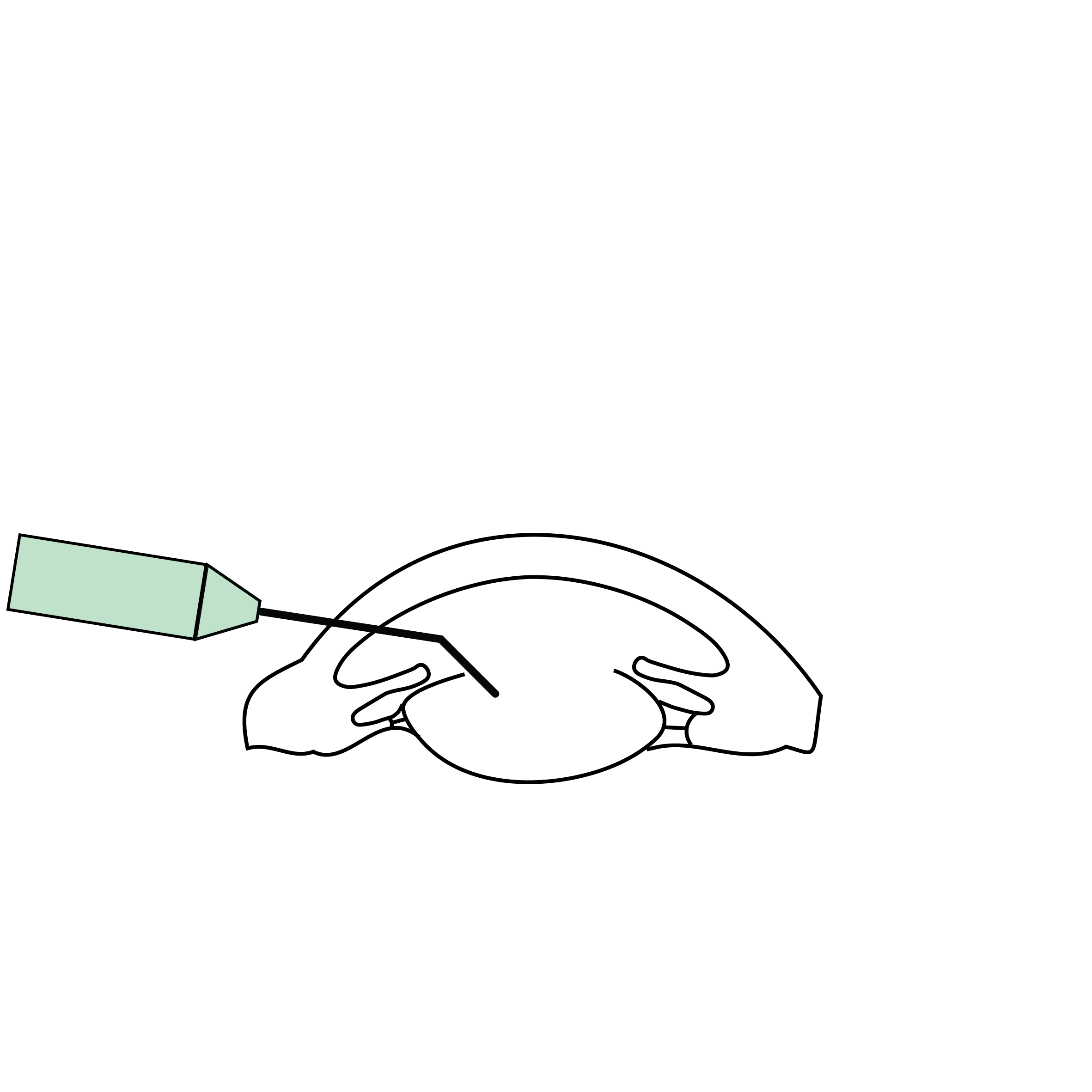
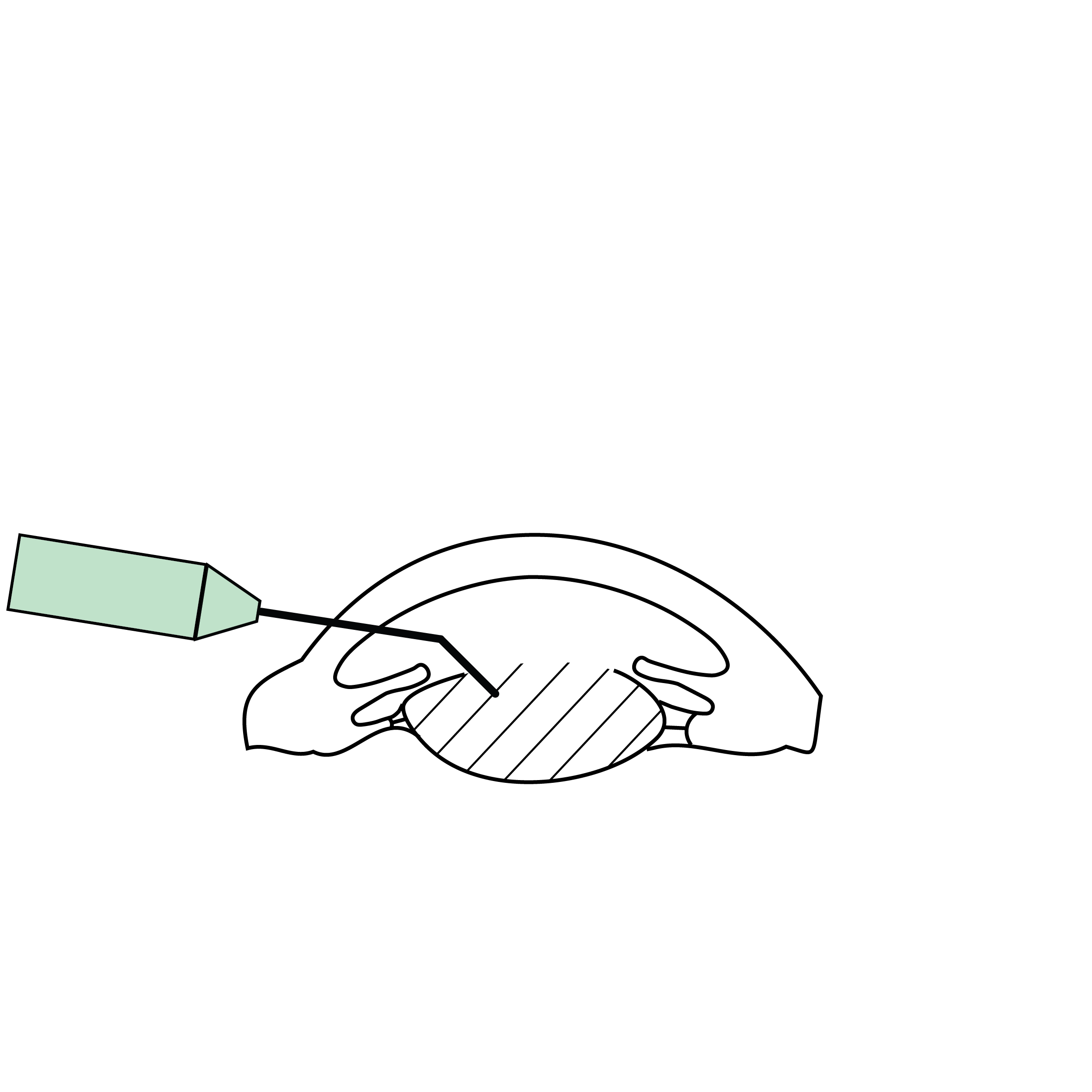
For those seeking a long-term solution, several surgical options are available:
- Laser refractive surgery (such as SMILE, LASIK or PRK).
- Implantable contact lenses (Phakic IOLs/ICL).
- Refractive lens exchange (replacement of the clear natural lens).
- Cataract surgery (utilising corrective lenses to address the underlying hypermetropia).
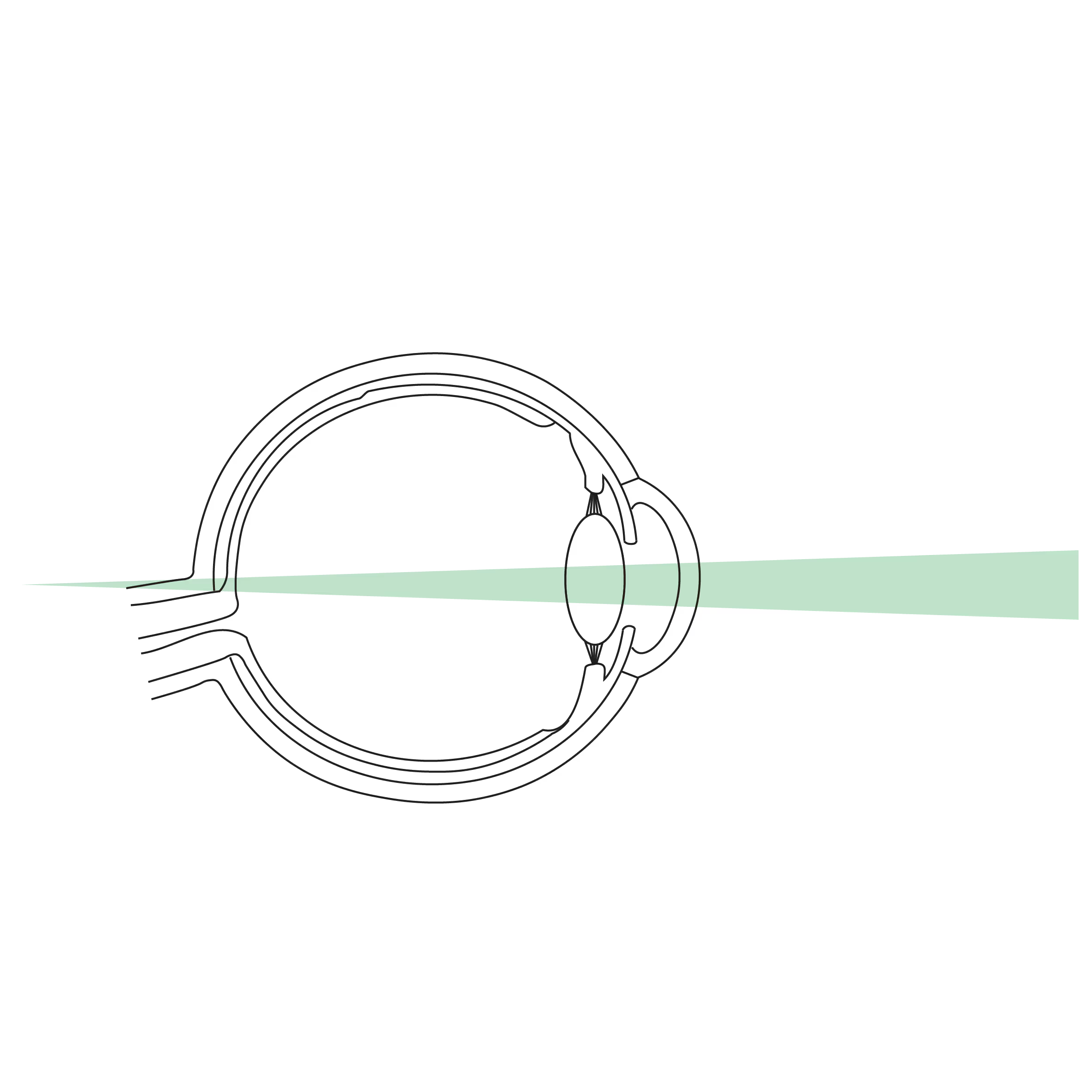
Farsightedness: This image shows a side view of an eye. Light rays coming from a distance focus behind the retina instead of directly on it. This causes farsightedness: near vision is blurry because the image does not form in the correct place.
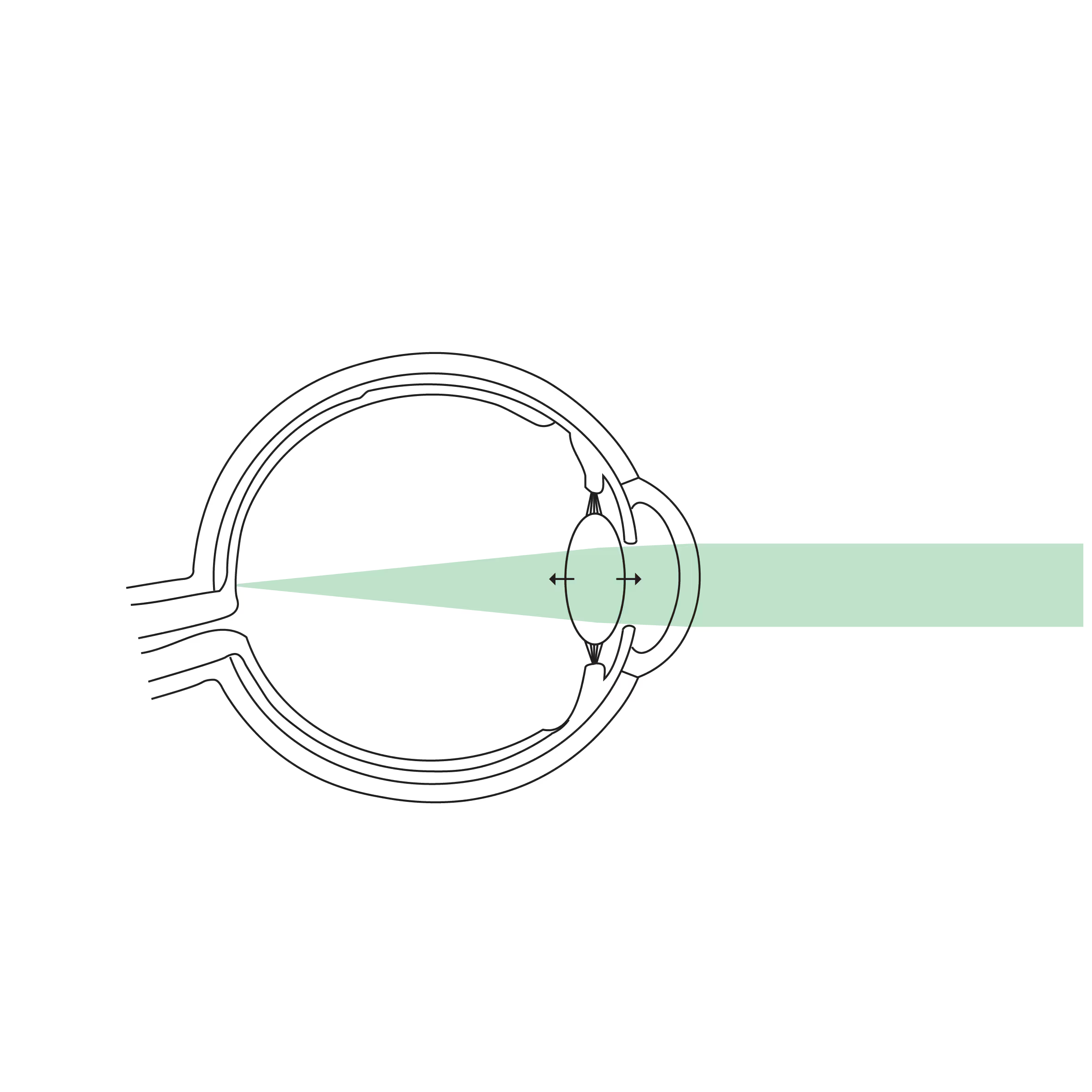
Accommodation: In this image, we see a hyperopic eye seen from the side. Thanks to the Accommodation (an effort by the lens), the light rays are reoriented to focus on the retina, which allows to see clearly. But this visual effort can fatigue the eyes, especially when viewing at close range.
What is long-sightedness (hypermetropia)?
Long-sightedness is a common vision problem. It is characterised by a focusing defect, often due to the eyeball being too short or the optical system of the eye having insufficient convergence power.
Distance vision is usually maintained through a process called accommodation (the eye's internal focusing muscles). This effort is much more intense for near tasks, which can lead to headaches and blurred vision when reading.
Because presbyopia is the age-related loss of this same accommodation, long-sighted patients often notice they need reading spectacles much earlier than others, as their eyes are already working at full capacity just to see clearly at distance.
How does it work?
When the focusing power of the eye is too weak or the eyeball is too short, light rays entering the eye converge behind the retina instead of focusing directly on it.
This results in blurred vision, particularly for nearby objects. In more severe cases, distance vision may also be affected. While it can occur at any age, children often have mild hyperopia that may improve naturally as the eye grows and lengthens over time.
What are the symptoms?
People with long-sightedness may experience the following:
- Headaches
- Eye fatigue (strain)
- Blurred vision (particularly up close)
- Strabismus (eye deviation or a "turn" in the eye) in some cases
These symptoms tend to worsen during near-vision activities, such as reading or studying and may occur intermittently. They often become more noticeable during periods of intensive close-work, such as during exam preparation. Although the visual system can compensate for mild hypermetropia initially, the prolonged exertion eventually leads to discomfort.
What are the treatments for hypermetropia?
Non-surgical options
Hypermetropia is most commonly corrected with spectacles or contact lenses using "plus" (+) lenses to add the necessary focusing power. Unlike myopia, orthokeratology is less commonly used for long-sightedness, though specialized rigid lenses do exist for certain prescriptions.
Surgical options
The most appropriate surgical correction depends on your age, the degree of hypermetropia and the shape of your cornea.
- Laser Eye Surgery: (e.g. SMILE, LASIK or PRK) Reshapes the cornea to increase its steepness and focusing power.
- Implantable Contact Lenses (ICL): A lens is placed inside the eye to provide the extra "plus" power needed without removing the natural crystalline lens.
- Refractive Lens Exchange (RLE): The natural lens is replaced with an artificial one. This is often the preferred choice for older long-sighted patients as it also prevents future cataracts.
- Cataract surgery: Once the natural crystalline lens is opaque, cataract surgery allows its replacement by a clear artificial one that can also correct hyperopia.
Linked conditions
%20au%20laser.avif)
.avif)
Les questions fréquentes
Si vous avez d'autres questions n'hésitez pas à nous contacter !
Book a consultation
Swiss Visio Montchoisi
1006 Lausanne, Switzerland