LASIK laser eye surgery
LASIK is a laser procedure that corrects vision by remodelling the cornea. Using a femtosecond laser, a thin protective flap is created on the surface of the eye; a second laser (Excimer) then precisely reshapes the underlying corneal tissue to ensure light focuses correctly on the retina.
LASIK effectively treats short-sightedness (myopia), long-sightedness (hyperopia) and astigmatism, and it remains the gold-standard laser procedure for correcting presbyopia. The treatment is swift and painless, typically offering a very rapid recovery, with many patients achieving clear vision as early as the day after surgery.
How does it work?
Learn more about the procedure / equipment

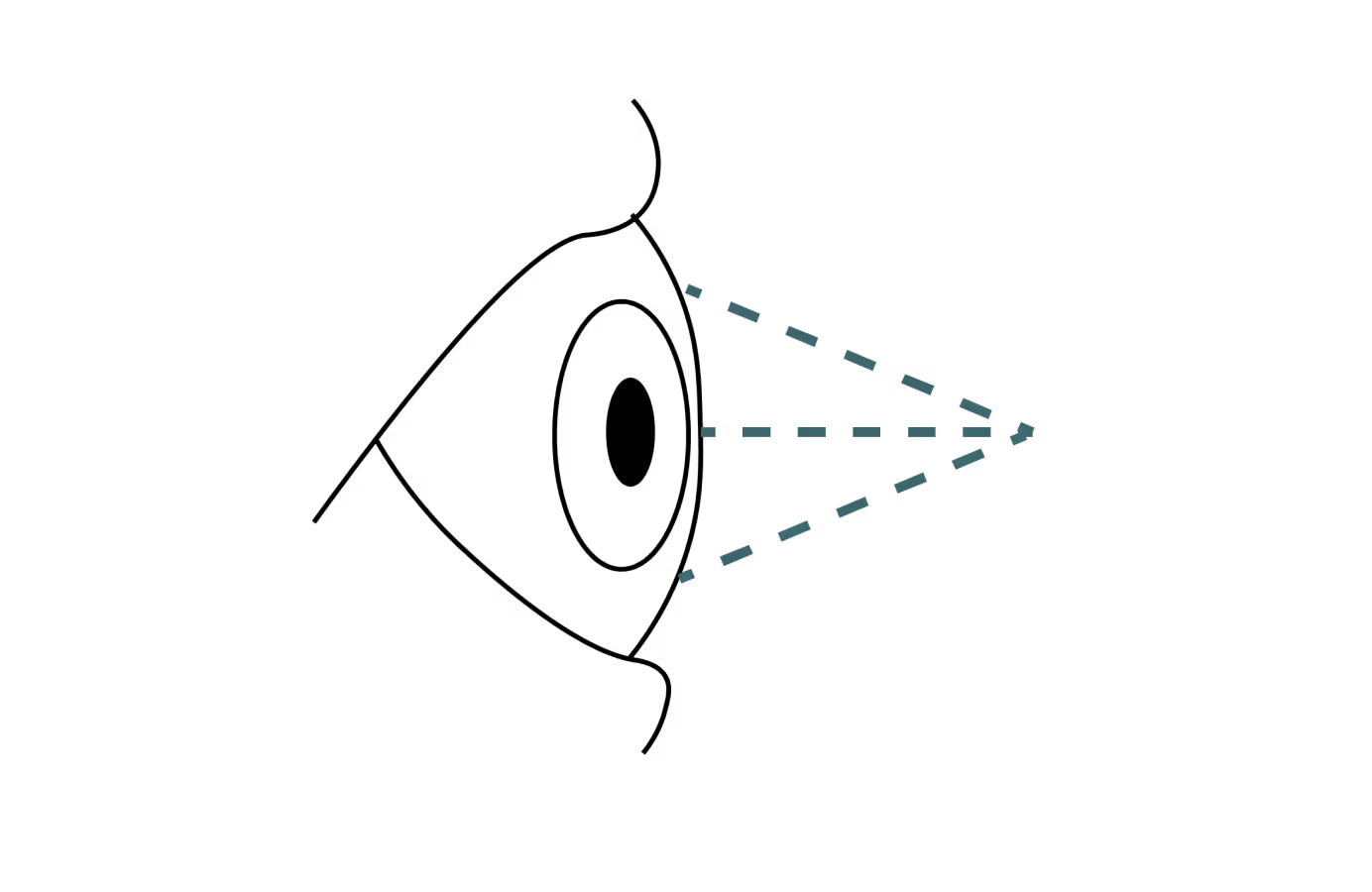
This illustration shows a complete eye in cross-section, viewed from the side, in a horizontal position as in a person standing upright.
The cornea, located at the front, is highlighted in green. This is the transparent part of the eye.

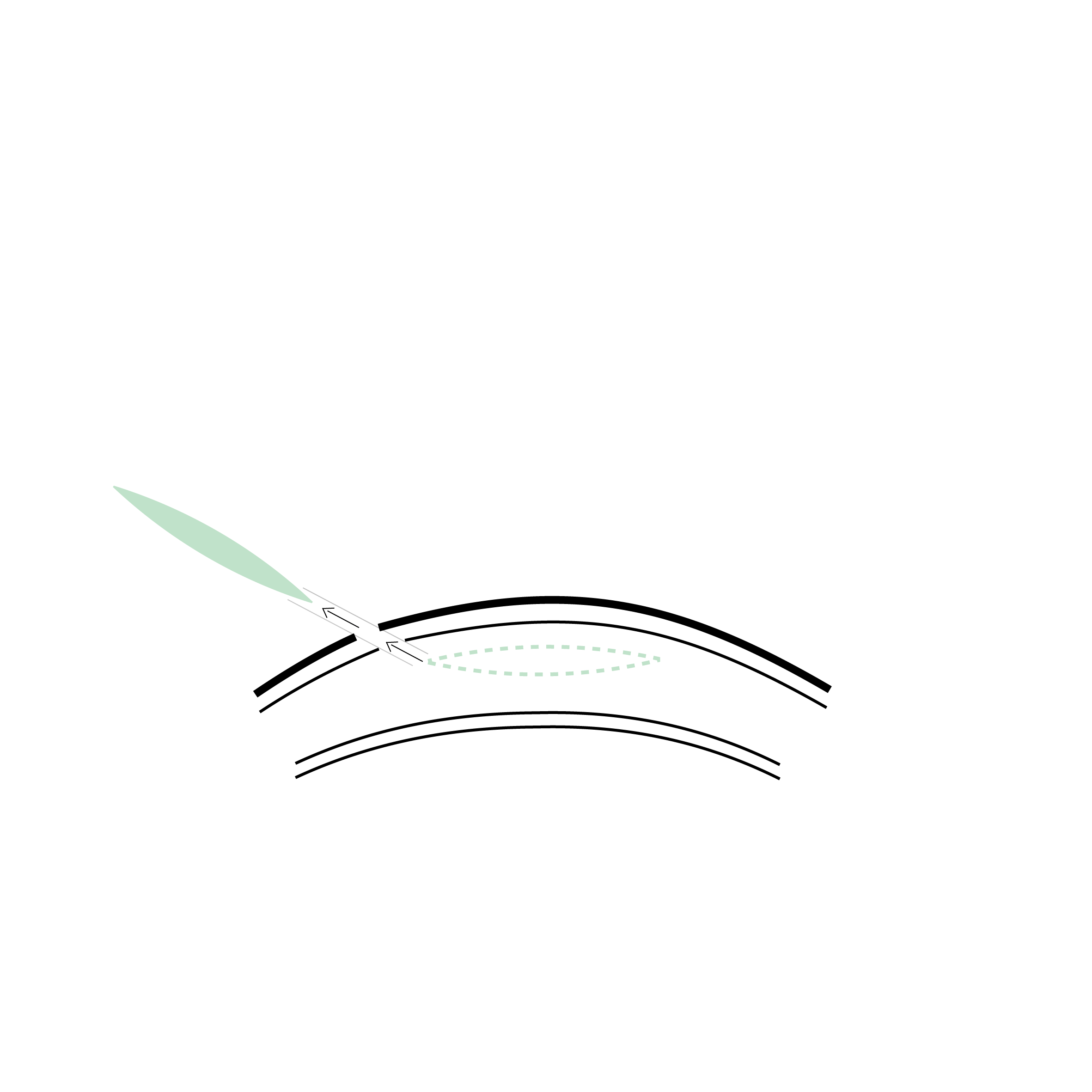
This diagram only shows the cornea in cross-section, represented in a vertical position as if lying on your back.
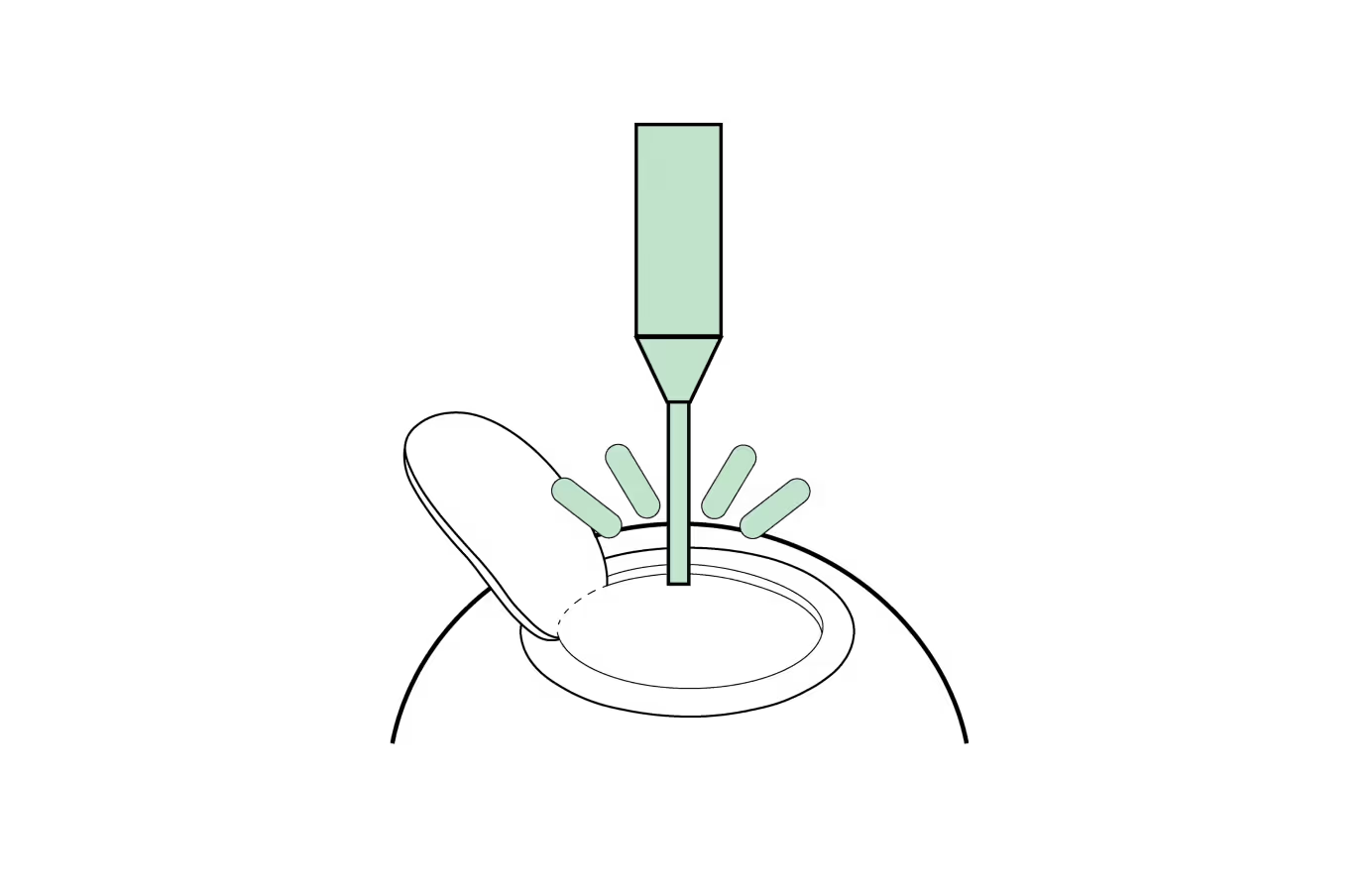
A high-precision femtosecond laser creates a thin flap in its superficial layers, preserving a hinge.

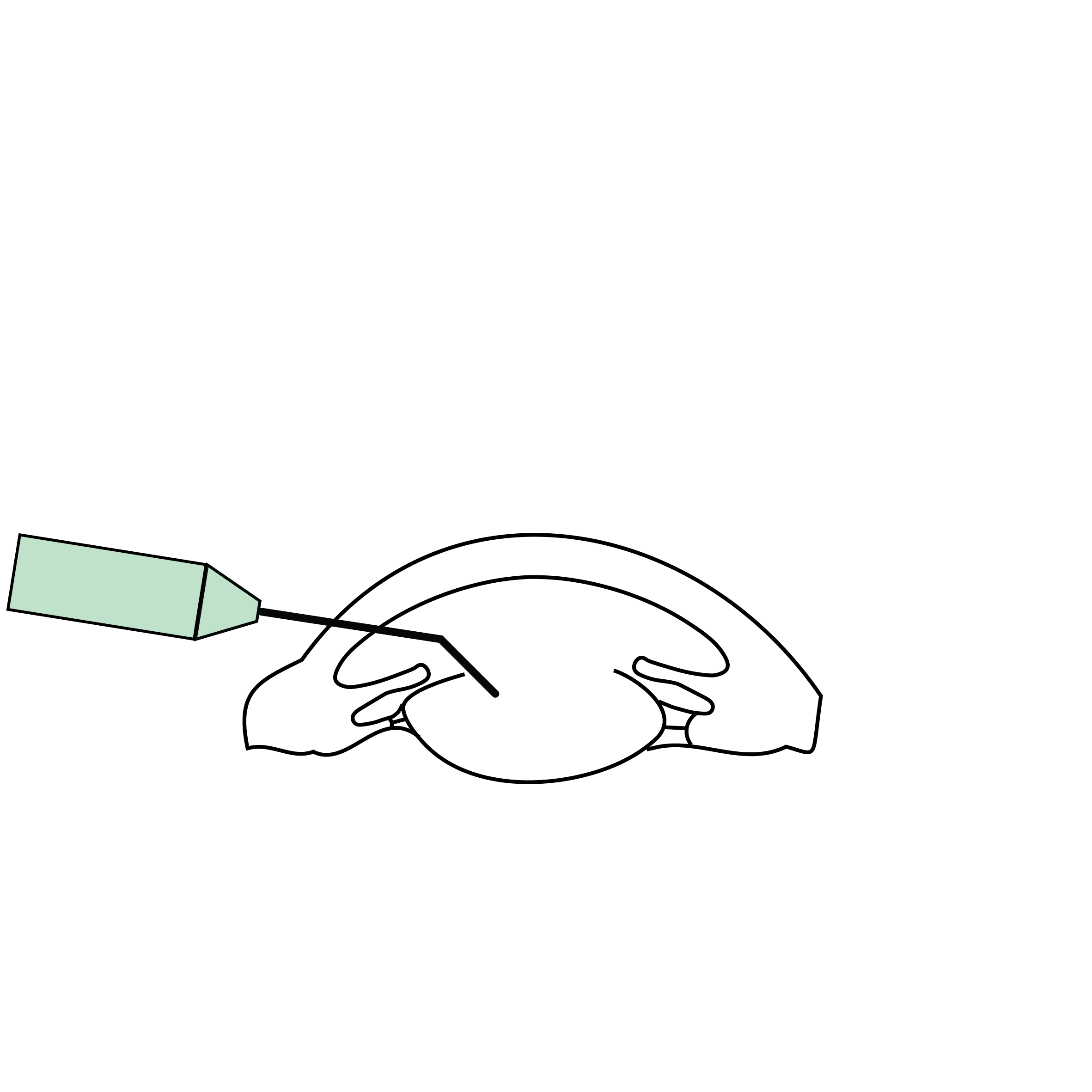
The corneal flap is gently lifted to expose the underlying stroma. The excimer laser treatment is then applied precisely to reshape the cornea and correct the visual impairment.

The corneal flap is gently repositioned in its original place. Precise alignment allows natural adhesion without sutures, ensuring rapid healing and reducing the risk of complications.

Healed cornea after LASIK: the flap is perfectly repositioned and integrated, and the corneal surface is smooth and transparent. Vision is clear without glasses or contact lenses.
What is LASIK surgery?
LASIK (Laser-Assisted In Situ Keratomileusis) is a highly common laser procedure used to correct refractive errors. It is a reference treatment for short-sightedness (myopia), long-sightedness (hyperopia) and astigmatism. It is also the gold-standard laser procedure for correcting presbyopia (often referred to as Presby-LASIK).
The objective of LASIK is to reduce or eliminate dependence on glasses or contact lenses by remodelling the cornea, the clear front window of the eye. This improves how light focuses on the retina at the back of the eye, resulting in sharper vision.
How does LASIK work?
- Preparation: Topical anaesthetic drops are applied to numb the eye, and a specialised gentle speculum is used to keep the eyelids open comfortably.
- Creation of the corneal flap: Using a high-precision Femtosecond laser, a microscopic circular flap is created on the surface of the cornea. This flap is gently lifted to reveal the underlying corneal tissue (the stroma).
- Corneal Remodelling: A second laser, the Excimer laser, uses a cool ultraviolet beam to remove microscopic amounts of tissue, reshaping the cornea based on your specific prescription:
- Short-sightedness: The cornea is flattened.
- Long-sightedness: The cornea is made more curved (steeper).
- Astigmatism: The laser smooths the cornea to make it more spherical.
- Presbyopia: A personalised treatment profile increases the depth of field to improve near vision.
- Repositioning the flap: The surgeon carefully replaces the flap. Precise alignment is essential to prevent complications such as microscopic folds or epithelial ingrowth. The flap adheres naturally and heals quickly without the need for sutures (stitches).
What are the benefits of LASIK?
- Rapid Recovery: Most patients notice a significant improvement almost immediately, with clear vision typically achieved by the day after surgery.
- High Success Rate: The vast majority of patients achieve 20/20 vision (100% vision) or better without the need for spectacles or contact lenses.
- Minimal Discomfort: The procedure is swift and painless due to advanced laser technology and effective anaesthetic drops.
- Lasting Results: For most, the results are stable, though vision can still change naturally as part of the normal ageing process.
Who is a suitable candidate?
- Age: Generally 18 years or older.
- Stable Prescription: Your optical prescription should be stable for at least 1–2 years.
- Ocular Health: You should be free from significant conditions such as keratoconus, advanced glaucoma, cataracts, or active infections.
- General Health: Severe untreated systemic conditions (e.g., uncontrolled diabetes) may affect eligibility, though many controlled conditions are compatible.
- Corneal Thickness: You must have sufficient corneal thickness to safely allow for flap creation and tissue removal.
- Pregnancy: Candidates should not be pregnant or breastfeeding, as hormonal changes can affect the prescription.
What are the risks of LASIK?
Like any surgical procedure, LASIK carries certain risks, though serious complications are exceptionally rare:
- Temporary Dry Eye: A gritty sensation or discomfort that usually resolves within a few weeks to months.
- Visual Disturbances: Halos or glare around lights, particularly at night, which are generally transient.
- Regression or Under-correction: In rare cases, an "enhancement" or "top-up" procedure may be required to fine-tune the result.
- Flap Complications: Such as microscopic folds or cells growing under the flap (epithelial ingrowth); these are typically easily managed if detected early.
- Infection: Extremely rare (estimated at less than 1 in 20,000 cases with modern protocols).
- Interface Inflammation: Occasional inflammation (DLK) that is generally well managed with anti-inflammatory drops.
- An extremely rare weakening of the corneal structure. With modern diagnostic technology, we can identify and exclude high-risk candidates to minimise this possibility. Avoiding vigorous eye rubbing (friction) post-operatively is also a critical factor in preventing this condition.
Note: The annual risk of infection from wearing contact lenses is significantly higher than the one-time risk of LASIK surgery.
Les différentes types de greffes
Découvrez les kératoplasties (= greffes de cornée)
Frequently asked questions
If you have any further questions, please do not hesitate to contact us!
Is LASIK safe?
Yes, it is a safe and proven procedure when performed by a qualified specialist. Like any operation, it carries rare risks, but these can be largely prevented through precise technique, careful patient selection, rigorous follow-up and the experience of the surgeon and their team, thereby ensuring optimal care and preserved vision.
Is LASIK painful?
No, LASIK is not painful thanks to the use of anaesthetic drops. You may feel slight pressure during the procedure, and most patients describe minimal discomfort afterwards.
How long is the recovery after LASIK?
Most patients notice clear vision without glasses or contact lenses within 24 to 48 hours of the procedure. The final result, with full stabilisation of vision, can take between 1 and 3 months.
What is the difference between SMILE and LASIK?
SMILE is a less invasive technique than LASIK: it does not require the creation of a corneal flap, using only 1 to 2 small, superficial corneal incisions. This reduces the risks of dry eyes, SMILE cap folds (vs. LASIK flap), and epithelial ingrowth.
What is the difference between PRK and LASIK or SMILE?
Unlike LASIK and SMILE, which require the creation of a flap (LASIK) or a lenticule (SMILE) in the cornea, PRK involves temporarily removing the epithelium (the "skin" of the cornea) before laser-reshaping the underlying stroma. It is often recommended for patients with thin, irregular corneas or those not eligible for LASIK or SMILE.
Linked procedures
Discover other related surgical topics
%20(1).png)
.avif)
.avif)

Book a consultation
Swiss Visio Montchoisi
1006 Lausanne, Switzerland