Astigmatism
Astigmatism is a common and treatable irregularity in the curvature of the cornea (the clear front surface of the eye) or the crystalline lens. Rather than being perfectly spherical like a football, the cornea is oval-shaped, similar to a rugby ball. This causes light to focus at multiple points, resulting in blurred or distorted vision at all distances.
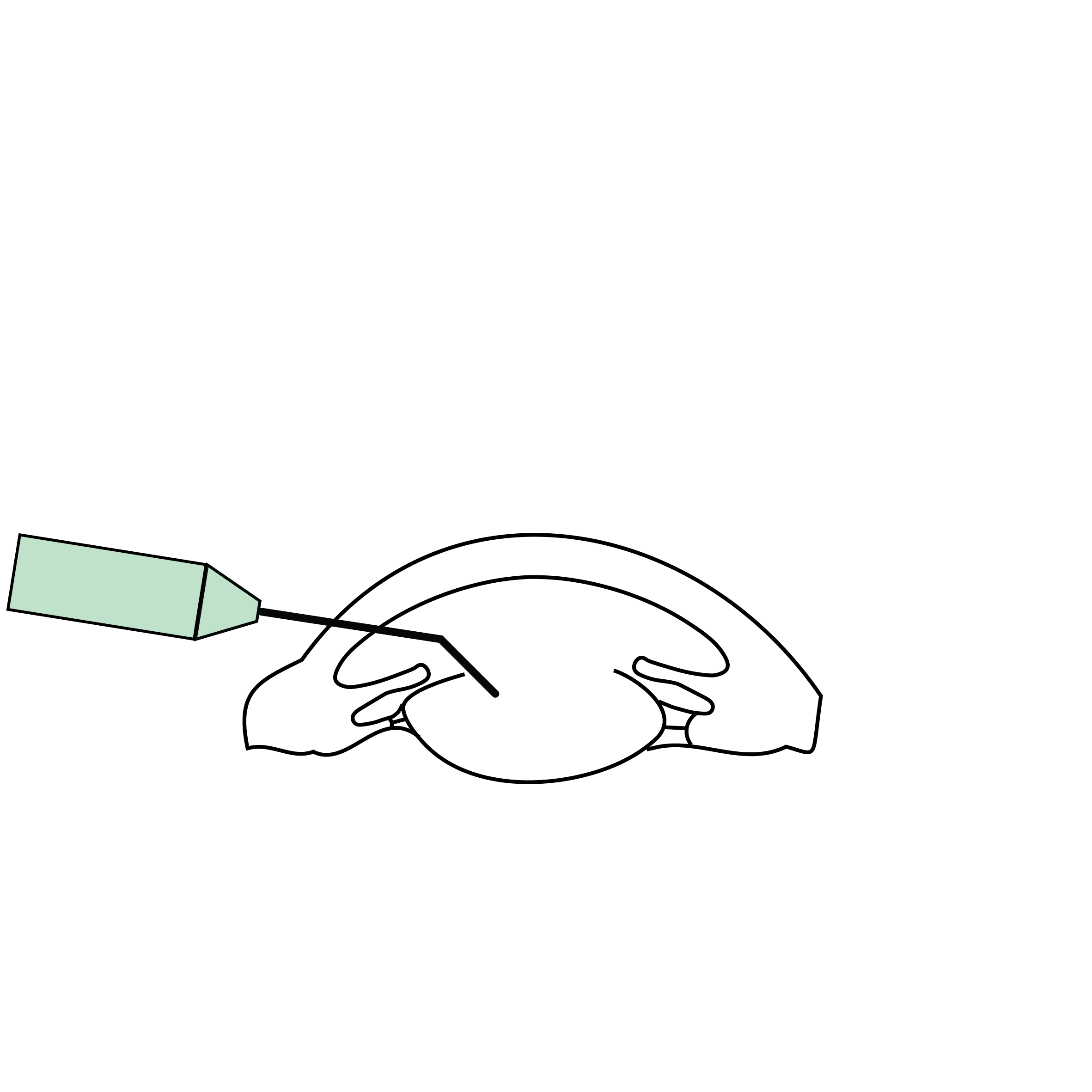
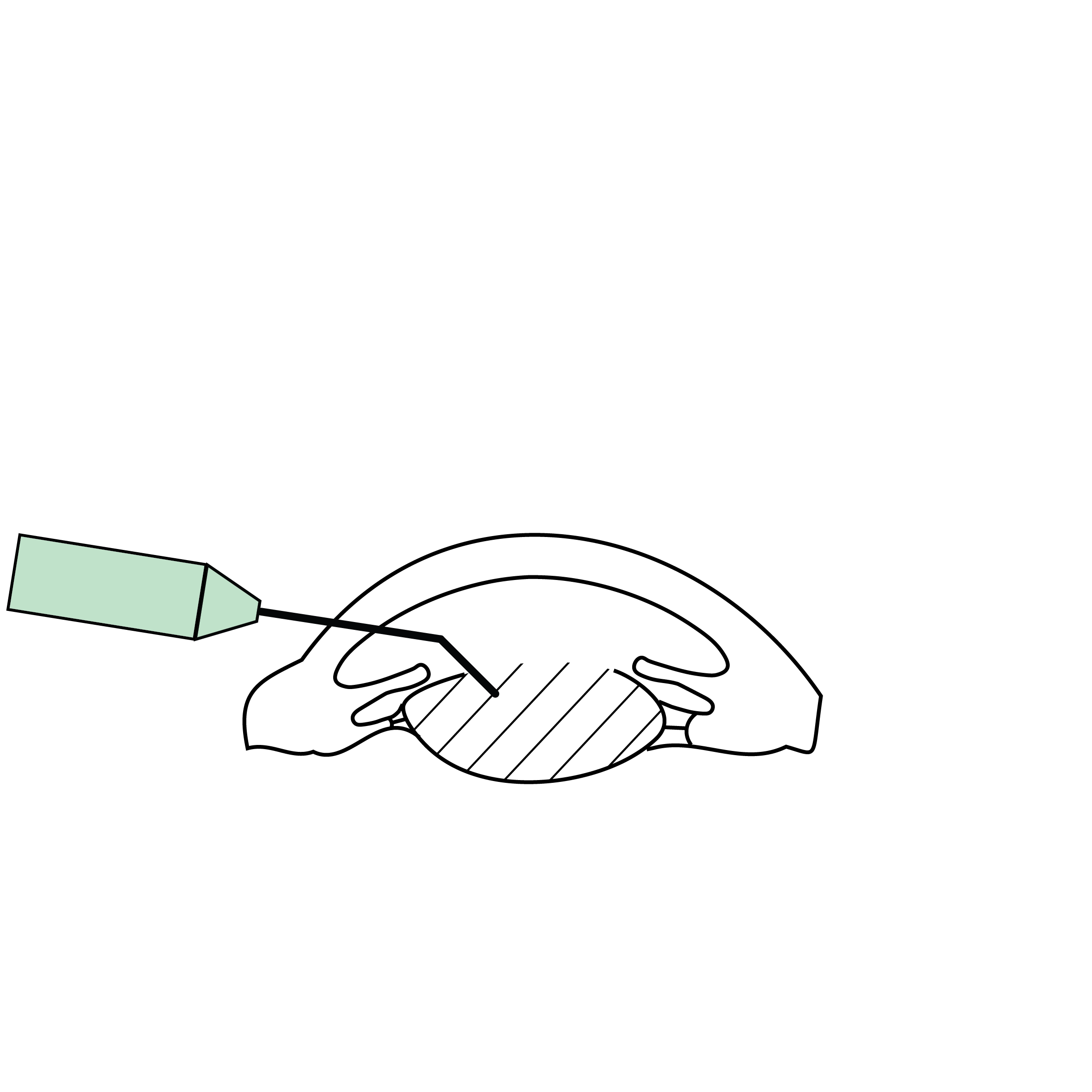
For patients who prefer not to wear spectacles or contact lenses, astigmatism can be corrected through laser eye surgery or the use of toric intraocular implants with cataract surgery, refractive lens exchange or implantable contact lenses.

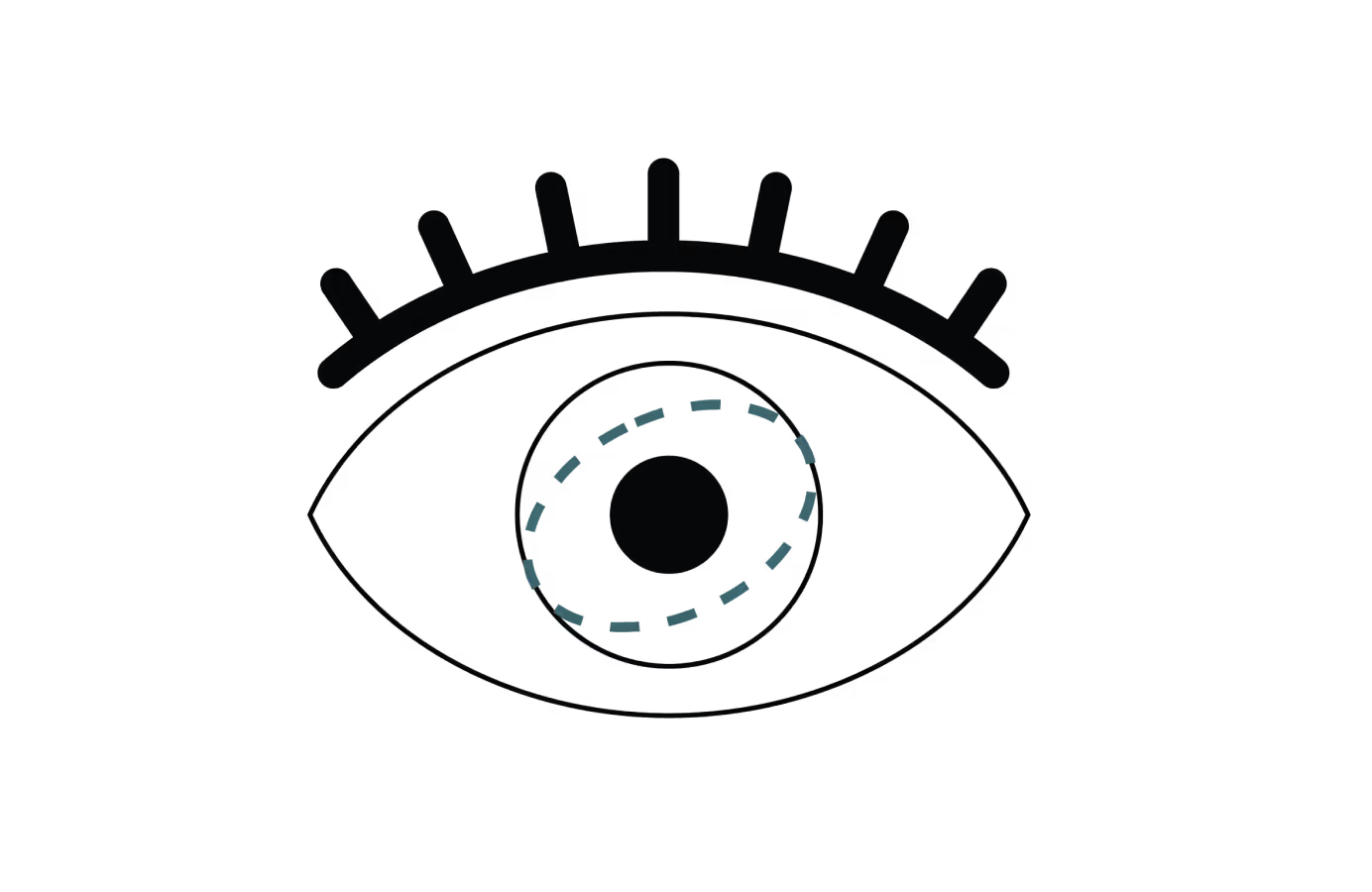

Thecylindrical emmetropia refers to an absence of astigmatism : the cornea and lens have a regular curvature in all meridians. This means that light is focused uniformly, without distortion, allowing for clear vision without correction.
In other words, there is no difference in power between the eye's axes, which complements spherical emmetropia (absence of myopia orhyperopia). Together, they define a perfectly emmetropic eye.
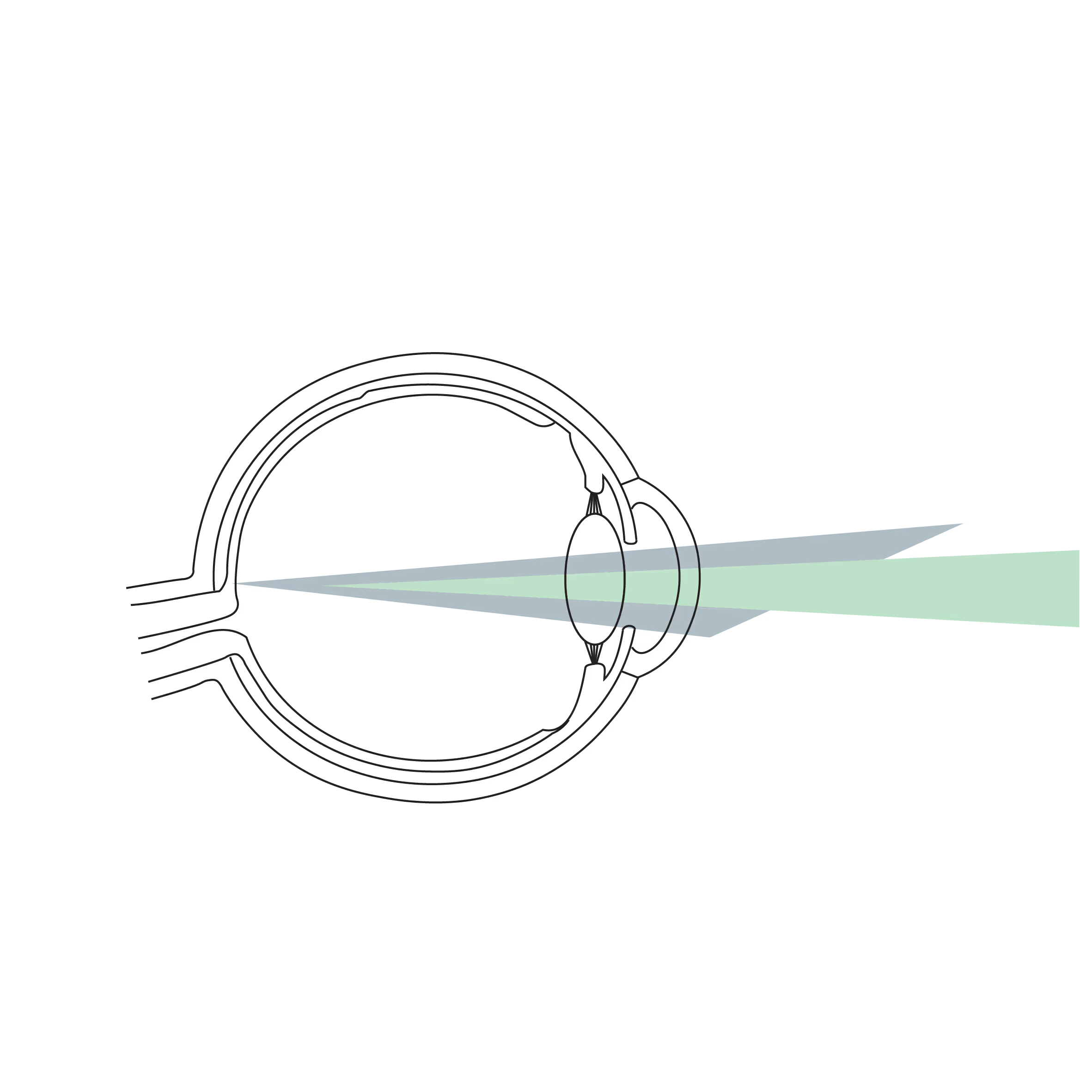
Astigmatism (cylindrical ametropia) : it's a defect in the curvature of the cornea (or sometimes the lens), which is more curved in one axis than in the other, like a rugby ball. This irregularity prevents light rays from converging at a single point, which causes blurred or distorted vision at all distances.
What is astigmatism?
In a person with astigmatism, the cornea and/or the crystalline lens have an irregular shape, often appearing more like a rugby ball than a football.
This irregularity causes light rays to focus unevenly on the retina, resulting in blurred or distorted vision. Objects may appear fuzzy or stretched in certain directions, regardless of their distance from the eye.
What are the symptoms of astigmatism?
Patients with astigmatism often experience blurred vision and eye fatigue. Without optical correction, the eye’s optical system cannot compensate for the refractive error caused by this irregular shape. Consequently, those with untreated astigmatism may experience:
- Blurred or distorted vision at all distances.
- Eye strain, fatigue, and general discomfort.
- Squinting or pinching the eyelids to see more clearly.
- Headaches, particularly after tasks requiring focus.
- Difficulty with night vision, such as seeing glares or halos around lights.
What are the causes of astigmatism?
Astigmatism is primarily linked to the shape of the eye's optical structures (the cornea and the lens). It is often present from birth and frequently has a genetic component. However, it can also result from other factors, such as:
- Scars or trauma to the eye.
- Previous eye surgery that has altered the corneal shape.
- Specific eye conditions, including keratoconus (a progressive thinning of the cornea) or a pterygium (a non-cancerous growth on the white part of the eye).
What are the treatments for astigmatism?
Non-surgical treatment options
Astigmatism can be corrected using spectacles or toric contact lenses. Another option is orthokeratology (Ortho-K), which involves wearing rigid lenses overnight to temporarily reshape the cornea. While this reduces the refractive error for about a day, it requires nightly wear and carries the standard risks associated with contact lens use.
Surgical treatment options
The most appropriate surgical correction depends on several factors, including your age, the degree of astigmatism, and the thickness and shape of your cornea.
- Laser Eye Surgery: Procedures such as LASIK or PRK can permanently reshape the cornea to correct the irregularity.
- Toric Implantable Lenses: For those not suitable for laser, specialised lenses (ICL/IPCL) can be inserted into the eye.
- Refractive Lens Exchange (RLE): For older patients, replacing the natural lens with a toric intraocular lens can correct astigmatism and prevent future cataracts.
- Cataract surgery: Similarly to RLE, the use of toric intraocular lenses can correct astigmatism.
Linked conditions
%20au%20laser.avif)
.avif)
Les questions fréquentes
Si vous avez d'autres questions n'hésitez pas à nous contacter !
Book a consultation
Swiss Visio Montchoisi
1006 Lausanne, Switzerland