Implantable ICL lenses: a guide to correcting high myopia
Implantable ICL lenses correct high myopia, hyperopia and astigmatism when LASIK reaches its limits: discover this reversible intraocular solution.
Created on
20.07.2026
·
Updated on
09.08.2026

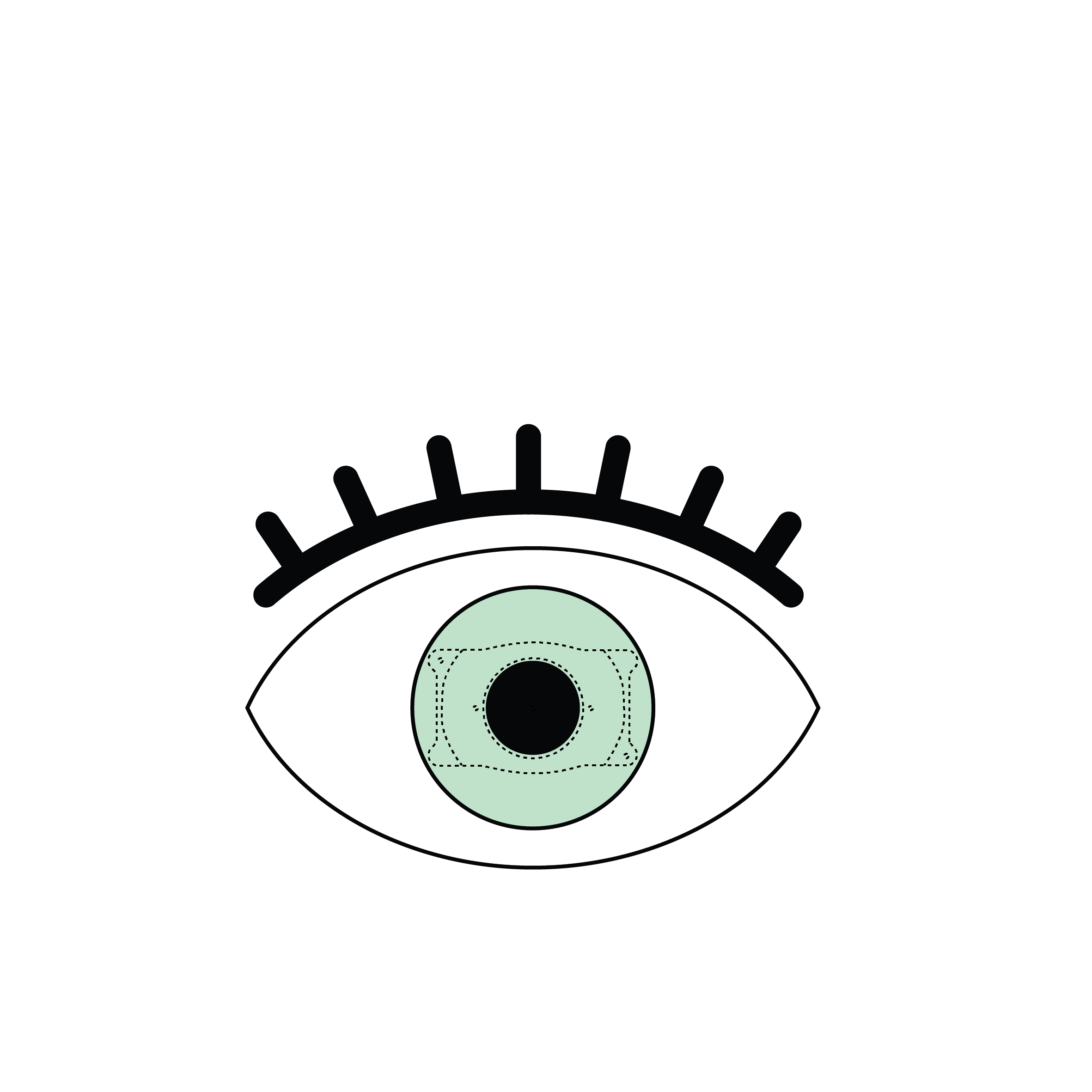
Implantable ICL lenses are intraocular lenses placed in front of the crystalline lens to correct high myopia and hyperopia with or without astigmatism. They offer an alternative to laser surgery when the cornea is too thin, too dry or the refractive error too high. If you are tired of thick glasses or contact lenses, this option is worth knowing about. Dr Arthur Hammer, FMH consultant ophthalmic surgeon, explains in this guide the principle of ICL implants, the profiles concerned, the comparison with LASIK, how the procedure is carried out, recovery and the cost in Switzerland.
What is an implantable ICL lens?
The ICL lens (Implantable Collamer Lens) is a so-called phakic intraocular lens, inserted into the eye without removing the natural crystalline lens. It sits between the iris and the crystalline lens, in the posterior chamber. It is also referred to as an IPCL (Implantable Phakic Contact Lens), a variant with a comparable principle. The term collamer refers to a soft, biocompatible material rich in collagen.
Unlike LASIK, the ICL does not modify the cornea. The lens acts like a contact lens placed inside the eye, permanently but reversibly. The crystalline lens remains in place, which preserves the natural focusing ability in young patients.
This feature is essential: the implant can be removed or replaced by the surgeon if vision changes. The ICL corrects myopia and hyperopia, even when high, and toric models additionally treat associated astigmatism.
Who are ICL lenses suitable for?
ICL lenses are intended for patients whose myopia cannot be safely corrected by laser. They mainly concern people with high myopia, often above 6 to 8 dioptres, sometimes up to 18 dioptres depending on the model.
Several situations point towards this solution rather than LASIK:
- Thin or irregular cornea, insufficient for laser correction
- Marked dry eye, which laser could worsen
- Myopia, hyperopia or astigmatism too high for safe corneal treatment
- Contraindication to laser vision correction (LASIK, SMILE, PRK) detected during the assessment (suspected keratoconus in particular)
The ICL is generally intended for adults between 21 and 60 years old (21 and 45 years old for hyperopia), with a stable correction for at least one year. Age limits are indicative and subject to specialist assessment. A sufficient anterior chamber depth and a satisfactory endothelial cell count are essential. Only a specialised preoperative assessment can confirm eligibility. If you have high myopia, a consultation with Dr Hammer will clarify the most suitable option for your eye.
ICL, LASIK or SMILE: what are the differences?
The choice between the ICL and laser refractive surgery depends on the anatomy of the eye and the degree of refractive error. The ICL is an additive intraocular surgery, whereas LASIK and SMILE reshape the cornea by removing tissue. The table below summarises the main differences.
No technique is universally superior. LASIK remains a benchmark for low to moderate myopia and presbyopia with a healthy cornea. The ICL takes over for high myopia or fragile corneas. Dr Hammer assesses these parameters on a case-by-case basis.
How is an ICL implant fitted?
Fitting an ICL implant is an outpatient microsurgical procedure performed under local anaesthesia. It is prepared by a thorough assessment, then carried out in a few minutes per eye. Respecting each step ensures the safety and precision of the result.
The preoperative assessment
The preoperative assessment is the decisive step. It aims to confirm the indication and to calculate the exact power of the implant. It includes several measurements:
- Ocular biometry and subjective refraction (with an without cycloplegia) to calculate the power of the lens
- OCT of the anterior segment and the retina
- Corneal topography and measurement of the anterior chamber depth
- Endothelial cell count, which assesses the health of the inner layer of the cornea
- Precise ocular measurements (including corneal parameters, anterior and posterior chamber depth) are taken to determine the ideal implant size.
These examinations rule out an underlying condition such as glaucoma or contact lens intolerance. Incorrect sizing exposes the patient to complications, hence the importance of rigorous measurements.
The procedure
On the day of the operation, the eye is anaesthetised with drops. The surgeon makes a micro-incision, then inserts the folded lens, which unfolds behind the iris. The procedure lasts on average 10 to 15 minutes per eye and is performed on an outpatient basis.
Both eyes are usually operated on during the same session. You return home the same day, with an eye shield and drop-based treatment.
Recovery and follow-up after an ICL lens
Recovery after ICL surgery is generally quick and painless. Most patients notice a clear improvement in vision within the first 12 to 24 hours. Slightly blurred vision and light sensitivity are common at first.
A check-up takes place the day after the procedure, then later to verify the position of the implant and the intraocular pressure. Treatment combines anti-inflammatory and antibiotic eye drops over a few weeks.
During this period, it is advisable to avoid swimming pools, saunas and rubbing the eyes. Resuming daily activities is usually possible within a few days. Regular ophthalmological follow-up remains recommended in the long term.
What are the possible risks and complications?
Like any intraocular surgery, fitting an ICL carries risks, rare but real. Transparent information is part of Dr Hammer's approach. Potential complications are monitored during the assessment and follow-up.
- Ocular hypertension: a transient rise in pressure may occur, particularly if the implant is too large
- Cataract formation: abnormal contact with the crystalline lens may promote clouding. Rare with newer-generation ICL
- Loss of endothelial cells: hence the importance of the preoperative endothelial cell count and follow-up
- Glare and transient night-time halos: fade over time
- Infection: extremely rare, as procedures are performed in a modern operating theatre under sterile conditions
Recent implants, fitted with a central hole that facilitates the circulation of the aqueous humour, have reduced some of these risks. Precise sizing and an experienced surgeon remain the best guarantees of safety.
What results can you expect from ICL lenses?
ICL lenses aim to provide a lasting reduction in dependence on glasses and contact lenses. In the vast majority of cases, patients achieve vision that is equal to or better than with their pre-operative optical correction. Visual quality is often reported as excellent, stable and comfortable.
The correction achieved is permanent for as long as the implant remains in place, yet it remains fully reversible. Should your vision change over time, several options can be considered:
- Onset of presbyopia (around 40–45 years of age): PresbyLASIK surgery can be performed on the cornea while keeping the ICL in place.
- When cataracts begin to affect vision later in life (around 65–70 years of age): The ICL is removed and cataract surgery is performed during the same procedure.
No result can be guaranteed in advance: the outcome depends on the anatomy of the eye and adherence to follow-up. Dr Hammer, FMH consultant ophthalmic surgeon in Lausanne, sets realistic objectives during the consultation.
How much does an ICL implant cost in Switzerland?
The cost of an ICL implant in Switzerland depends on the eye treated, the type of lens (toric or not) and the care facility. As a guide, you should budget around 3'500 to 5'500 CHF per eye.
Refractive surgery, including the ICL, is considered elective. It is therefore generally not covered by Swiss basic insurance (LAMal), the compulsory basic cover. Some supplementary insurance policies sometimes contribute to the costs, subject to conditions.
A personalised quote is drawn up after the assessment, once the indication is confirmed. We invite you to check your cover with your supplementary insurer before the procedure.
In practice with Dr Hammer
Dr Arthur Hammer sees patients in Lausanne and Geneva, and operates in particular at Clinique de Montchoisi. Every ICL lens project begins with a full assessment: subjective refraction (with and without cycloplegia), biometry, corneal topography/tomography, OCT, endothelial cell count, white-to-white and other ocular dimensions measurement. This step confirms eligibility, selects the implant size and allows the alternatives to be discussed with you, including LASIK. The aim is a shared decision, based on your anatomy and your lifestyle.
FAQ: frequently asked questions about ICL lenses
Is the ICL implant reversible?
Yes, one of the advantages of the ICL lens is its reversibility. The implant is placed in front of the crystalline lens without removing tissue and without modifying the cornea. The surgeon can therefore remove or replace it if vision changes, for example with the onset of an age-related cataract. This feature clearly distinguishes the ICL from LASIK, which permanently removes corneal tissue. Reversibility does not mean absence of risk: any new procedure must be assessed in consultation.
ICL or LASIK for high myopia?
For high myopia, the ICL is often preferred when the cornea is too thin, too dry or the refractive error too high for safe laser treatment. LASIK remains suitable for low to moderate myopia with a healthy cornea. The ICL corrects higher levels of myopia without touching the cornea, while remaining reversible. The choice depends on many parameters measured during the preoperative assessment. Only a specialised examination, such as the one carried out by Dr Hammer, can decide between these two options.
How much does an ICL implant cost in Switzerland?
In Switzerland, the cost of an ICL lens is, as a guide, around 3'000 to 5'500 CHF per eye. The price varies according to the model, the presence of astigmatism to correct and the care facility. This amount usually includes the implant, the procedure and the immediate follow-up. A precise quote is provided after the preoperative assessment. As refractive surgery is considered elective, it is generally not covered by basic insurance.
Is the ICL covered by LAMal?
In most cases, fitting an ICL lens is not covered by LAMal. Refractive surgery is considered elective, outside the schedule of services of the compulsory basic insurance. Some supplementary insurance policies may contribute to the costs, depending on the contracts and conditions. We advise you to check your cover with your insurer before scheduling the procedure. The clinic can provide you with the documents needed for a claim to your supplementary insurer.
Is fitting an ICL lens painful?
Fitting an ICL is carried out under local anaesthesia with drops and is not painful during the procedure. You may feel simple pressure or discomfort from the light. After the operation, a gritty sensation, mild discomfort and light sensitivity are possible for one to two days. These symptoms subside quickly with eye drop treatment. Intense pain or a sudden drop in vision should prompt you to contact your ophthalmologist without delay.
How long does an ICL implant last?
An ICL lens is designed to remain in place permanently, without wear comparable to that of a conventional contact lens. It does not need to be replaced regularly. It can, however, be removed if vision changes or during future cataract surgery. The collamer material is biocompatible and well tolerated in the long term. Regular ophthalmological follow-up allows the correct position of the implant and the health of the cornea to be checked over the years.
Can astigmatism be corrected with an ICL?
Yes, there are toric ICL lenses designed to correct astigmatism in addition to myopia. These implants incorporate a cylindrical correction oriented according to the axis of the astigmatism. Their precise positioning during the procedure is essential for an optimal result. The preoperative assessment finely measures the astigmatism in order to select the right model. If you combine high myopia and astigmatism, the question of implant choice will be addressed during your consultation with Dr Hammer.
What are the risks of ICL lenses?
Like any intraocular surgery, the ICL carries rare but real risks: a rise in eye pressure, formation of a cataract, loss of corneal endothelial cells, glare or exceptionally, infection. Precise sizing of the implant and a full assessment reduce these risks. Recent models, fitted with a central hole, have improved the circulation of the aqueous humour. Regular follow-up allows any abnormality to be detected early. These points are discussed in detail during the preoperative consultation.
In conclusion
Implantable ICL lenses are a valuable option for correcting high myopia and astigmatism when LASIK is unsuitable. Reversible and respectful of the cornea, they address situations of a thin, dry cornea or high refractive error. Fitting them nonetheless requires a rigorous assessment and careful follow-up.
Only a specialised consultation can confirm whether this solution is right for you. To assess your eligibility and discuss the alternatives, make an appointment with Dr Arthur Hammer, FMH consultant ophthalmic surgeon in Lausanne and Geneva. You can also learn more about implantable ICL and IPCL contact lenses.



Linked procedures
.avif)
%20au%20laser.avif)
%20(1).png)
Related articles
Discover our other articles that might interest you



Book a consultation
Swiss Visio Montchoisi
1006 Lausanne, Switzerland